Get a quote!
NEWS
Recent News
Biodegradable Wet Wipes and Eco-Materials Become R&D Priorities
Time : 17/10/2025
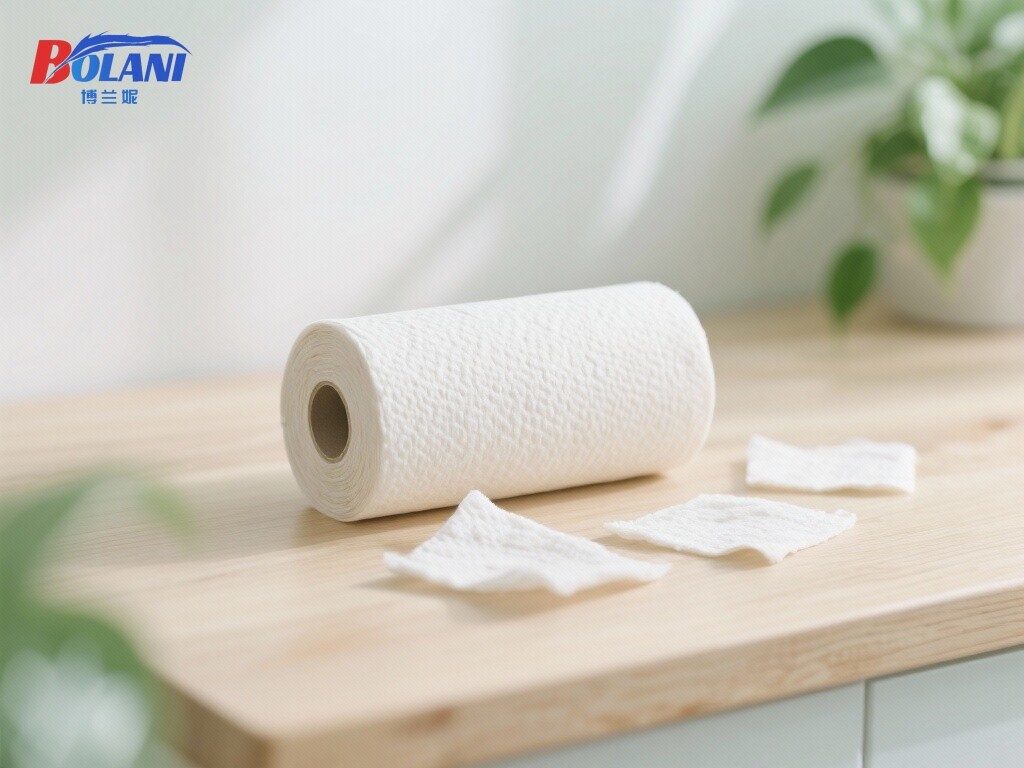
Recently, the global household cleaning and maternal-child care market has witnessed a significant trend: the R&D and application of biodegradable wet wipes and eco-friendly raw materials have become core strategic priorities for leading enterprises in the industry. This shift not only responds to the upgrading of environmental policies worldwide but also aligns with the growing consumer demand for "safe and sustainable" products, opening up new growth avenues for export enterprises of household wet wipes and baby wet wipes.
According to data from a third-party market research institute, the global market size of biodegradable wet wipes exceeded $8.5 billion in 2024, with a year-on-year growth of 18%. Among them, the household wet wipes and baby wet wipes segments led the growth, with year-on-year increases of 22% and 25% respectively. The detailed data is shown in Table 1 below:
Table 1 Global Market Size and Growth of Biodegradable Wet Wipes in 2024
| Market Segment | Global Market Size (Billion USD) | Year-on-Year Growth Rate (%) | Core Driving Factors |
| Overall Biodegradable Wet Wipes Market | 8.5 | 18 | Upgrading of global environmental policies; growing consumer demand for safe and sustainable products |
| Household Wet Wipes | - | 22 | Promotion of the EU's Single-Use Plastics Directive (SUPD); upgraded environmental demand in household cleaning scenarios |
| Baby Wet Wipes | - | 25 | Mandatory labeling requirements in U.S. states; dual attention to safety and environmental protection among maternal and child groups |
Behind this growth are the promotion of policies such as the EU’s Single-Use Plastics Directive (SUPD) and the U.S. "Zero Waste Initiative". Specific policy requirements across major markets are summarized in Table 2:
Table 2 Policy Requirements for Biodegradable Wet Wipes in Major Markets
| Region/Country | Core Policy Name | Specific Requirements | Implementation Time | Impact on Export Enterprises |
| EU | Single-Use Plastics Directive (SUPD) | Comprehensive ban on non-biodegradable wet wipes | 2029 | Compels enterprises to switch to fully biodegradable formulas; requires certification such as EU OK Compost Home |
| U.S. (California, New York) | Baby Wet Wipe Labeling Regulations | Mandatory labeling of "biodegradability" and "ingredient sources" | Already implemented | Requires strengthened raw material traceability systems and improved product label information |
| Southeast Asia | Environmental Protection Policies (Gradually Advancing) | Gradual restriction on imports of non-environmentally friendly wet wipes; promotion of biodegradable products | Continuously being rolled out | Provides new market growth space for enterprises with environmental certifications |
| Middle East | Green Consumption-Related Policies | Encourages procurement of biodegradable cleaning and maternal-child products |
"Under policy-driven demands, overseas customers are increasingly clear about the environmental requirements for wet wipes, especially baby wet wipes. In addition to being fragrance-free and non-irritating, ‘biodegradable’ and ‘flushable’ have become basic procurement standards," said a person in charge of a leading domestic wet wipe export enterprise. This year, the company has added 3 new production lines focusing on eco-friendly products: household wet wipes adopt FSC-certified wood pulp and bamboo fiber blended substrates, while baby wet wipes are further upgraded to 100% organic cotton materials. Tests show that these products can be completely degraded in the natural environment within 60 days, and have obtained international certifications such as the EU’s OK Compost Home and the U.S. ASTM D6400. Their export volume has increased by 35% compared with the same period last year.
In the R&D of raw materials, the industry is accelerating the breakthrough of technical difficulties in "balancing environmental protection and performance". In the past, some biodegradable wet wipes had problems such as "easy breakage" and "poor moisture retention". Now, by adding natural plant extracts (such as aloe vera gel and chamomile essence) and biodegradable thickeners (xanthan gum, agar), enterprises can not only ensure the softness and skin-friendliness of baby wet wipes and the cleaning power of household wet wipes but also achieve the environmental protection of the entire life cycle. The R&D director of an enterprise focusing on baby wet wipe exports revealed: "Our newly launched baby wet wipes have passed skin sensitivity tests and can decompose into fine fibers within 30 minutes in sewage treatment systems to avoid pipe blockage. This technology has obtained long-term orders from many European supermarket chains."
For export enterprises, deploying eco-friendly wet wipes is not only a compliance requirement but also a key to building brand trust. On a well-known domestic wet wipe foreign trade website, "biodegradable certification" and "eco-material traceability" have become core display modules on product detail pages, and some enterprises also provide download services for raw material testing reports. "Overseas customers, especially maternal and child buyers, will focus on verifying the environmental qualifications and production processes of products. The ‘Green R&D Column’ launched on our website updates industry policies and product R&D progress monthly, increasing the customer consultation conversion rate by 20%," said the website operation director.
Looking ahead, as environmental policies in emerging markets such as Southeast Asia and the Middle East are gradually implemented, the export demand for biodegradable wet wipes is expected to continue to grow. Industry experts suggest that export enterprises can further focus on two directions: "upgrading the safety standards of baby wet wipes" and "developing multi-functional eco-friendly formulas for household wet wipes". By cooperating with international environmental protection institutions and participating in the formulation of industry standards, enterprises can strengthen brand professionalism and credibility, and seize opportunities in the green market.
Previous page:Strong Growth in Global Adult Incontinence Care Market
Next page:Already the last
Please give us a message
Bolani (Shandong) Hygiene Products Co., Ltd
Phone : +86 18864857115
WhatsApp : +86 18864857115
WeChat : +86 18864857115